
About the person
born 1946 in Stuttgart
lives and works in Düsseldorf
Helmut Schweizer is a renowned conceptual and performance artist, painter, and photographer based in Düsseldorf, whose work is strongly influenced by the natural sciences, ecology, and a critical view of civilization.
From 1967 to 1973, Schweizer studied painting at the Karlsruhe Academy of Fine Arts under renowned instructors such as Horst Antes and Fritz Klemm, while simultaneously studying philosophy and art history.
Helmut Schweizer’s perspective on life has been strongly shaped by historical catastrophes such as Hiroshima and Chernobyl, as well as by the ecological challenges of the present. In his art, he engages intensively with physical, biochemical, and nuclear aspects and critically reflects on the consequences of human intervention in nature.
In addition to photography and installations, the Düsseldorf-based artist works with large-format graphic portfolios, collages, and objects such as chemical glass flasks or models.
About the artwork
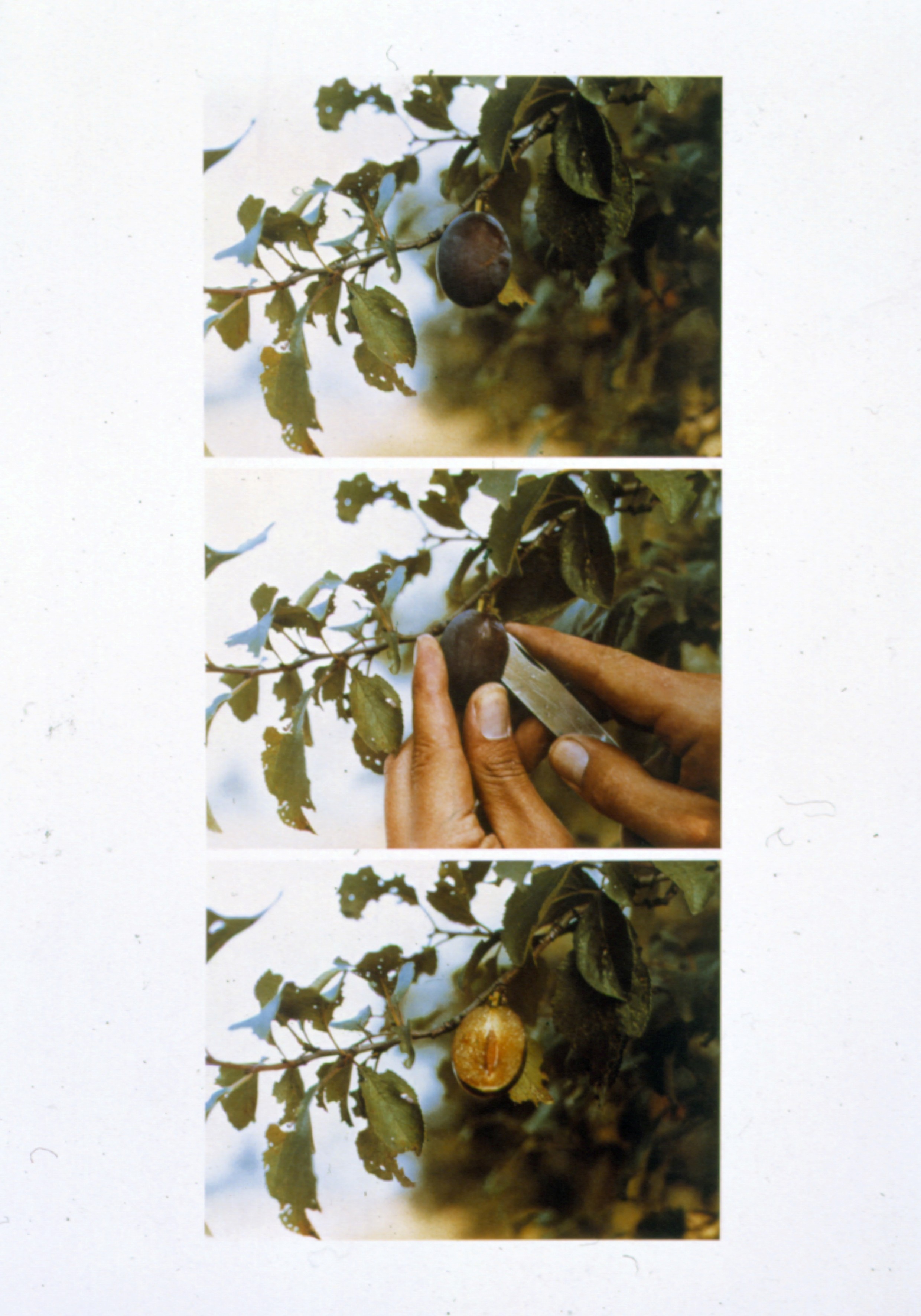
The significant photographic series 2Handlungen" (Actions) consists of over one hundred three-part sequences. It documents seemingly mundane everyday routines in order to examine human actions and their impact on our environment. The three photographs are arranged horizontally rather than vertically. The top image depicts the initial situation. The middle image captures the action (the human intervention) while the third image shows the resulting outcome.
While Helmut Schweizer documents the action objectively and dispassionately, the viewer begins to feel a certain unease in the face of the consistently small yet irreversible impact. They begin to question the necessity and benefit of these interventions. The targeted depiction of destruction by human hands - focused on the individual act - becomes symbolic of humanity’s broader interventions in its environment and their often unforeseeable consequences.